
First image of the L-mount SG-image 35mm f/2.2 mounted on the Lumix S9
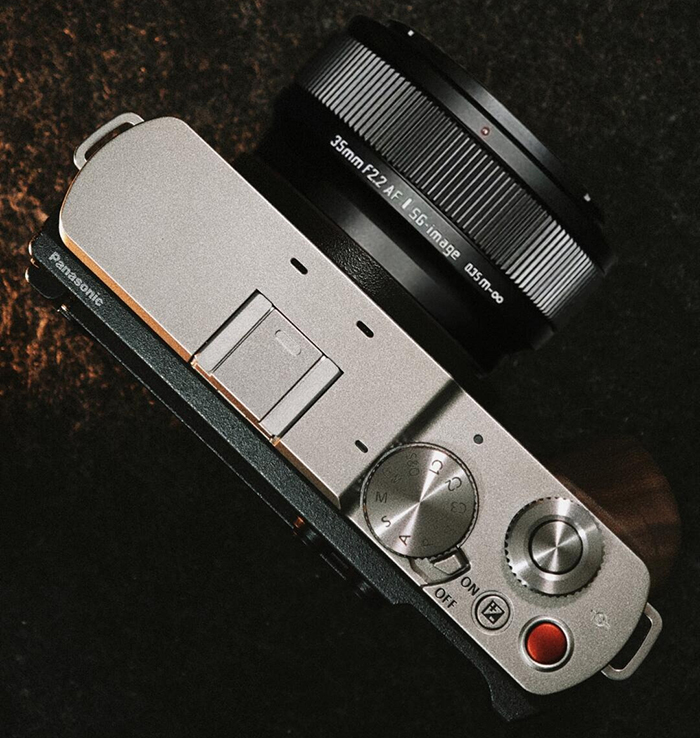
Here is the first image of the new SG-image 35mm f/2.2 L-mount Full Frame autofocus lens. Look absolutely great on the camera!
Source Rednote
Thanks HaltTheSystem!

Here is the first image of the new SG-image 35mm f/2.2 L-mount Full Frame autofocus lens. Look absolutely great on the camera!
Source Rednote
Thanks HaltTheSystem!
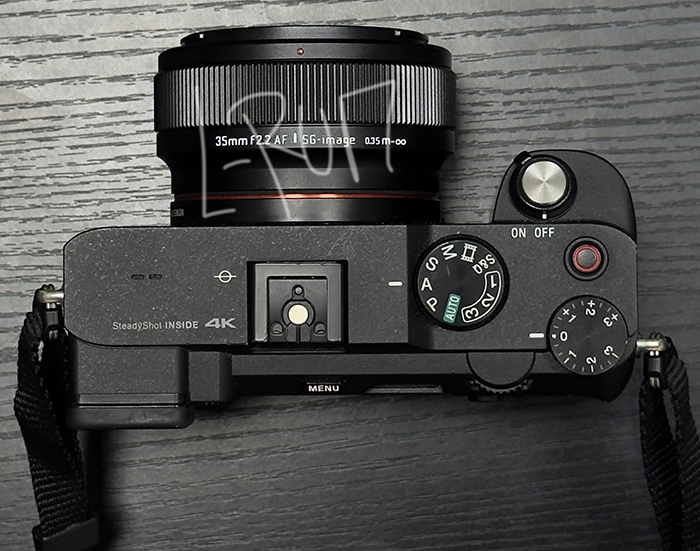
Our reader Z.W spotted this image of a new SG-image 35mm f/2.2 AF Full Frame pancake lens. What you see is the E-mount version but Z.W. told me and L-mount version will be available too! 35mm f/2.2 Full Frame autofocus lens for L-mount…this will look great on the Lumix S9 and Sigma BF. Imagine if Panasonic would have launched the S9 with a pancake lens carrying those same specs instead of the manual 26mm f/8.0. The camera would have sold much better!
Z.W. told us the the official bundle probably includes a metal square lens hood. I hope the image quality is decent and if that’s the case it will sell very well. Also because usually SG-images are extremely affordable (you can find them here on Amazon).

Brightin Star new 35mm f/1.4 Full Frame manual focusing lens is now available on Amazon for $159 (Click here) and on the Brightin Star store.
Here is the Black lens on the Sigma FP:

Panasonic S9 – I Love it!
Today deals at Amazon, BHphoto, Adorama, Amazon DE, Amazon UK, Amazon FR, Amazon IT, FotoErhardt DE, FotoKoch DE.
Lighting Fundamentals: A Bright Idea (Explora).
What I Would Do Differently If I Were to Start Over with Macro Photography (42West)
Tiny Cine Lenses I’d Actually Use 24/7 (Josh Cameron).
After 8,000 Hours with the LUMIX S5iiX, Here’s the Truth (Matthew Dangyou)
LUMIX Live: Open The Gates
Lumix S9 test at Kitamura. Lumix S5II test at Kitamura.
Share rumors here: this contact box, Signal, Telegram, or contact me via lrumorscameras@gmail.com. Thanks!
Subscribe our social networks here: Facebook page, X.com.
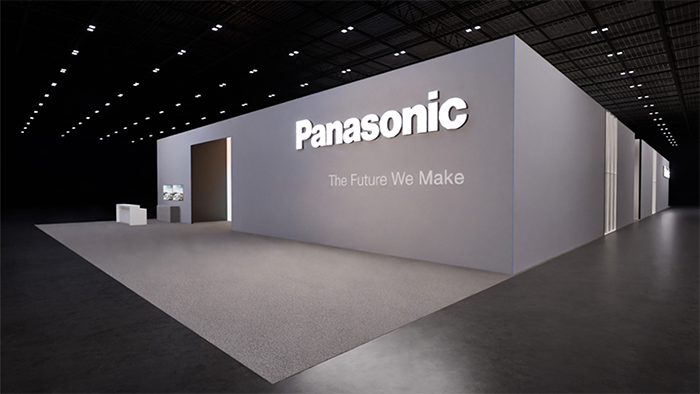
Panasonic announced their CES presence. There will be also a major press conference event but I doubt they will announce anything Lumix related. Here is the official press text:
–
Panasonic Holdings Corporation Co., Ltd. will exhibit at CES 2026, held from January 6 to 9, 2026, in Las Vegas, Nevada, U.S.A., under the theme “The Future We Make.” The Panasonic Group is committed to achieving “an ideal society with affluence both in matter and mind,” where both material and spiritual richness coexist. As part of this commitment, the Group will present its latest AI-driven innovations and demonstrate its commitment to B2B solutions that contribute to building a sustainable future.
At the core of the exhibit are AI infrastructure solutions that demonstrate how to achieve high performance, reliability and lower energy consumption in power-intensive data centers. The presentation will feature space-saving, highly secure energy storage systems that improve power management efficiency; capacitors and multi-layer circuit board materials that enable stable operation and high-speed communication under high temperature and current; energy-efficient technologies including liquid cooling pumps and compressors that protect servers from thermal stress; and high-precision semiconductor manufacturing equipment for the mid-process stages of energy-efficient AI semiconductors, which are becoming increasingly high-integration, high-speed, and high-capacity. These solutions demonstrate the Panasonic Group’s extensive technological expertise in AI infrastructure.
The Group will also present examples of B2B solutions in non-manufacturing sectors such as logistics and services, utilizing AI that support resilient supply chains and enhance people’s safety and comfort daily life.
The exhibit will highlight data center solutions designed to address the exponential growth in generative AI demand, featuring:
The Panasonic Group offers a distributed power system featuring “safety-designed” and “high-power” units that can be installed within server racks. Designed to support 24/7/365 data center operations, this system provides backup power during outages and incorporates peak shaving functionality*1 to supplement power during peak demand periods. As power demands are expected to rise with further GPU advancements, the Group delivers power solutions that contribute to stable data center operations and improved operational efficiency.
*1 Peak shaving function: A mechanism that stores electricity during off-peak hours and uses it during peak demand periods to enhance data center energy efficiency.
As devices and materials supporting the evolution of next-generation data centers, including generative AI servers, the Group offers products such as conductive polymer electrolytic capacitors and multi-layer circuit board materials. These include the Conductive Polymer Aluminum Electrolytic Capacitor (SP-Cap™), Conductive Polymer Tantalum Solid Capacitor (POSCAP™), and Conductive Polymer Hybrid Aluminum Electrolytic Capacitors, which suppress power circuit noise. Their compact size, high capacitance, high reliability, and ultra-low ESR (Equivalent Series Resistance) contribute to stable AI server operation. In addition, the Multi-layer Circuit Board Material MEGTRON™ supports high frequencies, achieving both industry-leading low transmission loss characteristics and high heat resistance. These products meet the demand for faster, higher-capacity information and communication infrastructure equipment driven by increasing data traffic. Both product lines support data center evolution as optimal solutions for power supply and substrate design in high-load environments characterized by high currents and elevated temperatures.
The Group has developed high-performance liquid cooling pumps and cooling compressors for AI-enabled data centers. The pump, designed for CDU*2 integration, achieves approximately 75% higher flow rate in a compact housing comparable to conventional models while offering extended lifespan and reduced maintenance requirements. Furthermore, a high-efficiency compressor utilizing refrigeration technology enhances cooling performance and energy efficiency. The synergy of these technologies provides a core cooling solution supporting stable operation in next-generation data centers.
*2 CDU: Coolant Distribution Unit
To address the challenge of reducing data center power consumption amid advances in generative AI, the Group deploys equipment solutions enabling the miniaturization and wide integration of advanced semiconductors, including AI chips. Leveraging manufacturing expertise cultivated over many years as an electronics manufacturer, the Group develops innovative equipment for the “middle-end process” that bridges semiconductor front-end and back-end operations. The lineup of the latest equipment achieves industry-leading quality and precision, contributing to the evolution of semiconductor manufacturing.
Leveraging security monitoring experience in factory networks, building systems, and energy management systems, the Panasonic Group delivers high-level security while maintaining the availability demanded by critical infrastructure such as data centers. The Group’s proprietary advanced anomaly detection technology and SOC (Security Operations Center) with extensive experience provide comprehensive support, from risk analysis and attack detection to incident response assistance.
This exhibit area will showcase efficient and sustainable solutions enabled by AI technology, featuring:
Blue Yonder, Panasonic Group’s AI-driven supply chain innovator, presents an interactive 3D journey that illustrates the future of warehouse automation. Visitors can explore technologies such as camera vision, robotics, RFID*3, and sensors across key stages—from yard entry with automated gate control and real-time truck tracking to dock arrival and inventory verification. Inside the warehouse, advanced automation optimizes workflows for both workers and managers, delivering greater efficiency, accuracy, and operational resilience.
*3 Radio Frequency Identification
Hussmann, a Panasonic Group business unit specializing in refrigeration and food retail solutions worldwide, has introduced new merchandisers designed to support energy efficiency and operational flexibility. These units utilize natural R-290*4 refrigerant and offer configurable options to meet diverse retail requirements. Mobile island units enable adaptable store layouts and effective product presentation, while AI-driven IoT-based solutions provide real-time equipment management, predictive maintenance, and help reduce refrigerant leaks. Additionally, electronic shelf labels with clear displays and extended battery life contribute to improved operational efficiency and accurate pricing.
*4 Natural Refrigerant R-290: A naturally derived refrigerant primarily composed of propane, featuring an extremely low Global Warming Potential (GWP) that contributes to reduced environmental impact.
CPS (Cyber-Physical System) 2.0 is a cross-industry technology solution that integrates advanced technologies such as Generative AI, IoT, and sensors to digitally reconstruct physical environments, enabling visualization, standardization, and optimization. These insights are then fed back into the real world to create new value—including improved efficiency, productivity, and quality. Built on Panasonic’s manufacturing expertise and knowledge accumulated across diverse on-site operations, this digital solution is applicable to a wide range of fields, from manufacturing to non-manufacturing industries. By integrating various data—such as video, facility data, equipment information, design data, operator attributes, planning data, and operational records—CPS 2.0 identifies causal relationships across entire workflows and applies optimal standardization and optimization measures to upstream processes. This defines CPS 2.0 as a feedforward-style CPS that enables fundamental, root-cause-driven problem solving.
Using proprietary AI-powered data analysis with facial expression recognition technology, the Panasonic Group is able to estimate brain age in real time based on four distinct facial expressions. The Brain Healthcare Quotient (BHQ), an internationally recognized indicator of the state of brain health, can now be estimated in approximately one minute—without the need for conventional MRI scans. By enabling regular BHQ measurements to monitor the state of brain health and encouraging proactive lifestyle adjustments, the Group presents a next-generation healthcare solution that delivers a transformative health experience designed to extend healthy life expectancy for people of all ages, from working adults to seniors.
To help reduce the need for long-term care, it is essential to understand the health and living conditions of seniors. Using collected data on individual risk factors and expert insights, AI generates personalized intervention plans to mitigate these risks. Additionally, by leveraging personality traits and local community resources (such as gathering spaces), the Panasonic Group uses AI-driven conversational engagement to encourage positive behavioral change. This approach aims to foster a more inclusive society that reduces the number of seniors requiring care and lessens the burden on professional caregivers. It also seeks to enhance seniors’ autonomy by improving health literacy around preventive care and strengthening intergenerational connections between active seniors and younger people, ultimately advancing the well-being of the senior population.
*5 Research and development theme promoted under Japan’s Cabinet Office Strategic Innovation Promotion Program (SIP) Phase 3 “Building an Inclusive Community Platform” project.
Users wear the “Rhythm Monitor” device while sleeping to track changes in low-temperature and high-temperature phases linked to the female menstrual cycle, along with sleep patterns. By inputting weight, activity levels, and daily physical and mental discomforts, the dedicated app provides health condition predictions and supportive advice. Users can also consult healthcare professionals regarding health matters. Additionally, automatically generated personal health reports for each menstrual cycle help establish the habit of objectively reviewing physical and mental states and trends. As a next-generation healthcare solution enhancing user well-being, the service launched in Japan in October 2025.
The Panasonic Group will showcase cutting-edge technology in the fields of renewable energy, recycling, and waste reduction. Featured technologies include:
Combining an integrated glass structure with proprietary inkjet printing and laser processing technologies, the Group achieves both flexible design and high durability. This enables the introduction of renewable energy through building-integrated photovoltaics (BIPV) to buildings’ windows, walls, balconies, and other surfaces previously unrelated to power generation. Capable of meeting diverse design needs—from simple transparent patterns that harmonize with spaces to decorative motifs that enhance architectural design and interiors—these cells are anticipated as a next-generation energy solution well-suited for urban buildings and residences.
Centered around a “Disassembly CPS (Cyber-Physical System)” that visualizes product disassembly ease, the system simulates and optimizes disassembly actions and required time using 3D CAD. The resulting data informs new product design and automated disassembly robots, contributing to efficient part reuse and remanufacturing. Furthermore, precise disassembly enables high-purity separation of materials such as plastics and metals, allowing the production of high-quality recycled materials and advancing the recycling process. By incorporating design principles that enhance maintainability, the Group aims to achieve both longer product lifespans and resource recovery. The Panasonic Group is building a next-generation recycling infrastructure for a circular society, targeting practical implementation by fiscal year 2028.
Please visit https://news.panasonic.com/global/presskits/ces2026 for all Panasonic CES 2026 news announcements and photos.
Tony Northrup just floated a bold concept for what Panasonic could — or should — unveil in 2026.
Panasonic in 2026: The Brand That Could Rethink the Sensor Itself
His expectations for Panasonic in 2026 are less about specific camera models and more about a potential shift in philosophy. While Panasonic doesn’t dominate rumor headlines the way Sony or Canon do, he clearly sees them as one of the few companies positioned to make a genuinely interesting move — especially in how cameras handle video for a modern, social-media-driven world.
Open gate today, but still not enough
He acknowledges that Panasonic already does more than most brands to accommodate flexible video workflows. Features like open-gate recording allow creators to use the full sensor and later crop for vertical formats, which is something Sony largely ignores and Canon only partially addresses. However, he argues that open gate is still a compromise. Cropping a 3:2 or 16:9 sensor down to vertical wastes resolution and limits framing freedom.
In his view, Panasonic understands the problem — but hasn’t gone far enough yet.
The square-sensor idea: radical, but logical
His most interesting Panasonic prediction is the idea of a square sensor camera. Instead of treating vertical video as an afterthought, a square sensor would allow creators to capture horizontal and vertical content simultaneously without heavy cropping. For people shooting YouTube, Instagram, TikTok, and client work at the same time, this would be a genuine workflow advantage rather than a marketing feature.
He points out that square sensors are not some futuristic fantasy. Medium-format film cameras have used square frames for decades. The only reason modern cameras abandoned them is tradition — not practicality. In a world where vertical video generates billions of views and dollars, sticking rigidly to horizontal-only sensor designs feels increasingly outdated.
Why Panasonic makes sense for this experiment
Panasonic, in his view, is one of the few brands that could realistically try something like this. They already cater heavily to video-first users, they’re willing to take design risks, and they don’t rely as much on legacy still-photography expectations. A square-sensor camera wouldn’t have to replace existing lines — it could exist alongside them as a tool for hybrid creators who care more about flexibility than tradition.
He doesn’t frame this as a guaranteed release, but rather as an opportunity. If Panasonic wants a clear differentiator in 2026, this is the kind of move that would immediately set them apart from Sony, Canon, and Nikon, all of whom remain deeply conservative in sensor shape and camera ergonomics.
Panasonic’s quiet advantage
Unlike some competitors, Panasonic already speaks the language of creators who live in both the horizontal and vertical worlds. They understand codecs, workflows, heat management, and real-world production needs. A sensor designed from the ground up for modern content creation would be a natural extension of that mindset, not a gimmick.
Safe evolution or bold experiment?
Ultimately, his Panasonic outlook sits at a crossroads. They can continue refining open-gate video and incremental improvements — or they can make a bold hardware decision that acknowledges how people actually shoot and consume content in 2026. If any traditional camera company is willing to challenge the assumption that sensors must be rectangular and horizontal-first, Panasonic feels like the most plausible candidate.
Do you think Panasonic should play it safe with open-gate refinements — or take the risk and redesign the sensor itself for the vertical era?
