





Sony Fanboy Tries LUMIX S1 II for the FIRST TIME!

Sony shooter Sidney Diongzon shared a playful take in his latest video, starting with a joke about switching from Sony to Lumix—only to reveal why he’s still sticking with Sony. Over the past two months, he’s been testing the Lumix S1 II, and he admits it’s one of the most impressive cameras he has used for video.

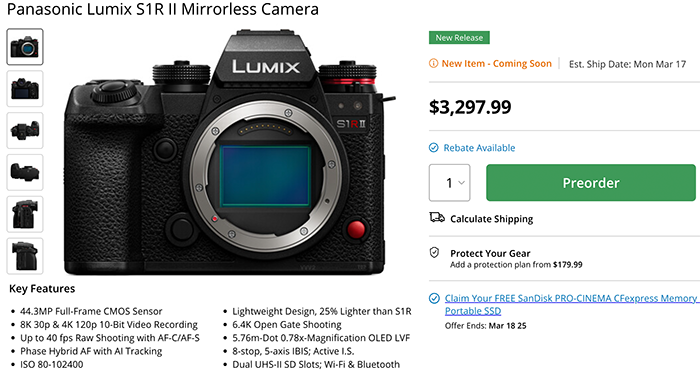
Sidney highlighted why the Lumix S1 II feels close to perfection: 6K open-gate recording, internal ProRes RAW, V-Log C, outstanding stabilization, much improved autofocus, 24MP stills with 70fps burst shooting, and full weather sealing. He also praised the new Lumix Lab app, which allows custom looks similar to Fujifilm film recipes.

His conclusion: The Lumix S1 II is a “9 out of 10” camera and a fantastic tool for videographers, but switching entire systems out of frustration with another brand doesn’t make sense. Instead, buy the gear that best supports your creative work—even if it means mixing brands.

Fun fact: CineD tested >the Nikon ZR mainly to highlight just how impressive the Lumix S1II still is.

CineD conducted an in-depth test of the new Nikon ZR full-frame cinema camera. During their review, they noted:

These values are all in the middle to lower ground for a compact hybrid consumer camera. Recently, the Panasonic LUMIX S1 II showed what is possible, especially with their “dynamic range boost” feature turned to “ON” – it shows 2.5 stops more dynamic range than the Nikon ZR for ProRes RAW (when comparing dynamic range values between cameras, you should always compare apples to apples, hence RAW codecs vs RAW codecs and internal compressed codecs vs internal compressed codecs).

and further down in the review:

Putting this into context, the Panasonic LUMIX S1 II managed 10 stops of exposure latitude (Lab Test here) with DR Boost “ON” (9 with DR Boost “OFF”), albeit at the expense of a high rolling shutter. I really urge you to have a look at the LUMIX S1 II results again. You can clearly see how much better the LUMIX S1 II behaves in the exposure latitude discipline!

Sony to Lumix S1II — Here’s the Truth

Chris take on the S1II:

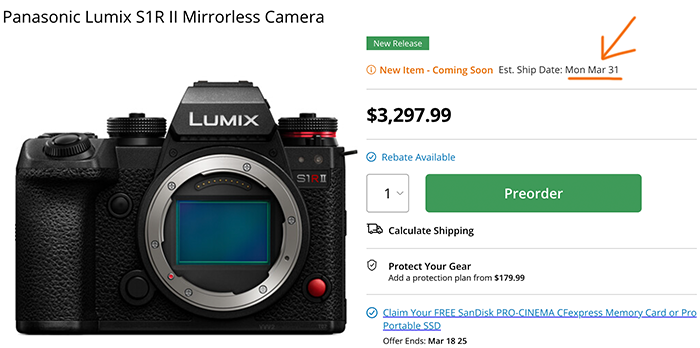
The Panasonic Lumix S1II beats the Sony FX3 in many areas — 6K open gate, anamorphic support with proper stabilization, richer codec options, better screen, more customizable controls, and improved color science. It’s a dream for manual and anamorphic shooters.
But it’s not perfect: autofocus still lags behind Sony, the menus feel messy, battery life drains fast, HDMI latency is annoying, and the Lumix ecosystem is still much smaller than Sony’s E-mount.
If you shoot anamorphic or want maximum flexibility, the S1II is the more exciting tool. But if you rely on flawless autofocus, battery endurance, and a huge lens library, the FX3 still holds the safer edge.

Lumix S1II at Bhphoto, Amazon, Adorama, Fotokoch, FotoErhardt, WexUK.

Josh Cameron: Lumix S9 Lover’s Take On The Sigma BF

Josh Cameron dives into a unique comparison between the Sigma BF and the Lumix S9, reflecting on design, usability, and purpose. He praises Sigma’s history of creating unconventional, artistic cameras—from the DP Quattros to the FP series—and now the BF, which he describes as “beautifully foolish.”

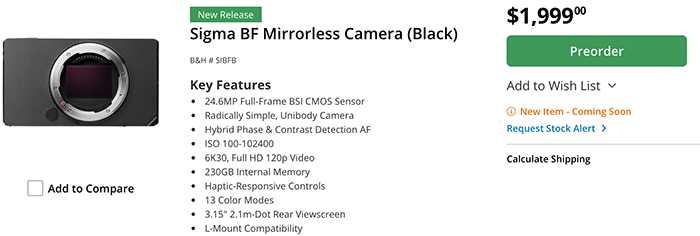
The Sigma BF is a minimalistic full-frame camera made from a solid block of aluminum, with a 24MP sensor, 230GB of internal memory, no SD slot, and just a single USB-C port. There’s no EVF, no hot shoe, no Wi-Fi or Bluetooth, and a fixed screen. Despite all this, Josh compares it to a luxury watch—beautiful, well-crafted, and intended for those who value form over function.

In contrast, the Lumix S9 is called his favorite camera ever. It’s affordable, has a fully articulating touchscreen, mic input, micro HDMI, cold shoe, Wi-Fi, Bluetooth, SD card slot, IBIS, and stunning out-of-camera JPEGs. The S9 is considered the better tool, while the BF is the elegant statement piece.

Josh admits the Sigma BF has many limitations, including the lack of touch functionality except for AF point selection, no stabilization, and quirky color science in some picture profiles. Still, he deeply appreciates the experience, the tactile feel, and the originality of the BF. He encourages viewers to see it as a collector’s piece—something special in a sea of lookalike cameras.

His final verdict? The Lumix S9 is the best EDC camera. The Sigma BF is a love letter to design nerds and camera enthusiasts who want something different, even if it means sacrificing practicality.